Olympia Blog
Build the Athlete First. Strong Athletes Start with a Foundation.
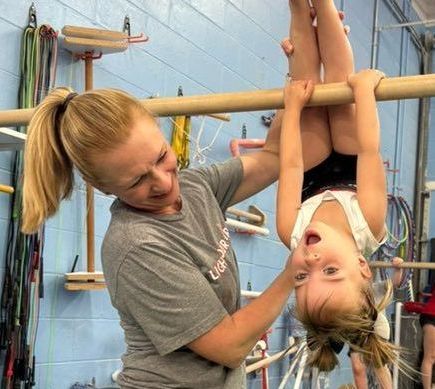
If your child is interested in sports, this is where it begins. Before the games. Before the competition. Before the team tryouts and the travel schedules and the jerseys with their name on the back. It starts with the fundamentals that support everything.
Every sport (whether your child ends up on a soccer field, a basketball court, a swim lane, or a baseball diamond) is built on the same physical foundation. Balance. Core strength. Body awareness. Coordination. The ability to control where your body is in space and what it's doing there.
Kids who develop those foundations early don't just get better at gymnastics or ninja. They get better at everything they try next.
The Athletic Foundation Nobody Talks About
Here's something most parents don't realize until they see it happen: the kids who pick up new sports the fastest are rarely the ones who specialized early. They're the ones who built a broad athletic base first. That base has a name in the athletic development world. It's called physical literacy - the confidence, competence, and motivation to move well across a wide range of activities. Kids who have it adapt faster. They read their bodies better. They recover from mistakes instead of getting stuck in them.
The Shared Foundation
Gymnastics and ninja are two of the most complete physical literacy builders available. Not because they produce gymnasts and ninja athletes (most of our kids won't compete in either sport). They build physical literacy because every class demands the full athletic vocabulary
- Balance: on beams, on hands, on one leg, upside down, while moving
- Core strength: from the first tuck hold to kipping and flipping
- Coordination: moving arms and legs and head and eyes together in sequence
- Spatial awareness: knowing where you are in the air, on a bar, mid-obstacle
- Agility: the ability to change direction quickly and with control
That's not a gymnastics list or a ninja list. That's the foundation underneath every sport your child might ever play.
Ask a college soccer coach what makes a great player, and they'll talk about body control. Ask a baseball coach about hitting mechanics, and they'll talk about core rotation. Ask a swimmer's coach about stroke efficiency, and they'll talk about “feel for the water” aka proprioception, the awareness of where your body is and what it's doing. These are skills gymnastics and ninja build every single week. They just get different names once a child carries them into another sport.
What Gymnastics Adds On Top
Gymnastics teaches kids how to move their whole body as one unit. How to control momentum. How to land. How to stay balanced when everything around them is asking them to fall. A young gymnast learns to hold tension in their core without thinking about it - the same core that will later rotate a bat, stabilize a soccer kick, or hold form in a swim stroke. Soccer players with gymnastics backgrounds tend to have better balance when they’re on the ball. Divers and figure skaters draw on gymnastics directly. Baseball and football players gain rotational power and injury resilience. Dancers & cheerleaders get form and line. Even runners benefit from the single-leg stability gymnastics builds. It’s the same stability that helps young athletes stay healthy in running-heavy sports.
What Ninja Adds On Top
Ninja develops things most traditional sports don't touch. Grip strength. Upper body pulling power. The ability to problem-solve physically, in real time, with your whole body. Gymnastics builds upper body strength through pushing, bracing, and hanging. Ninja adds pulling, a fundamentally different development pattern. That's why so many strong climbers, agile basketball players, and kids who can actually do a pull-up in gym class have ninja backgrounds. It also builds something harder to measure: the habit of solving movement problems. A ninja course isn't a skill to repeat. It's a puzzle to work through. Where do I put my hands? What happens if I jump from here instead of there? What if I try it a different way? Kids who grow up solving physical puzzles become athletes who adapt on the field. They don't freeze when a play breaks down. They improvise. That adaptability shows up everywhere: in sports, in PE class, in life.
And Then There's the Confidence…
Here's what surprises most parents: the athletic development is real and measurable, but it's not actually the only important thing happening.
Equally important is what's quietly building inside your child while all of that physical development is taking place. They're learning to try something hard and fail at it. To come back next week and try it again. To notice their own progress - not because someone told them, but because they can feel the difference in their own body. They're learning that effort works. That improvement is real. That they're capable of more than they thought they were yesterday.
That kind of confidence, the kind built through genuine effort and genuine progress, doesn't stay in the gym. It walks out the door with them. Onto soccer fields. Into classrooms. Into friendships. Into every life moment they'll face where the answer is keep trying.
Why Now Matters
There's a window for this kind of foundational development, and it's wider than most parents realize. Kids between four and twelve are in what sports scientists call the skill acquisition phase — their nervous systems are laying down movement patterns faster and more durably than they ever will again.
What a child learns to do with their body during those years becomes the foundation everything else is built on. You can't go back and add it later. Specialized sports skills come and go with interest and opportunity. The athletic foundation underneath them - balance, coordination, strength, body awareness, confidence - is built once, and it lasts.
At Olympia, that foundation is what every class is quietly building, whether your child ever steps onto a competitive floor or never mentions gymnastics again after age ten.
Build the athlete first. The rest follows.
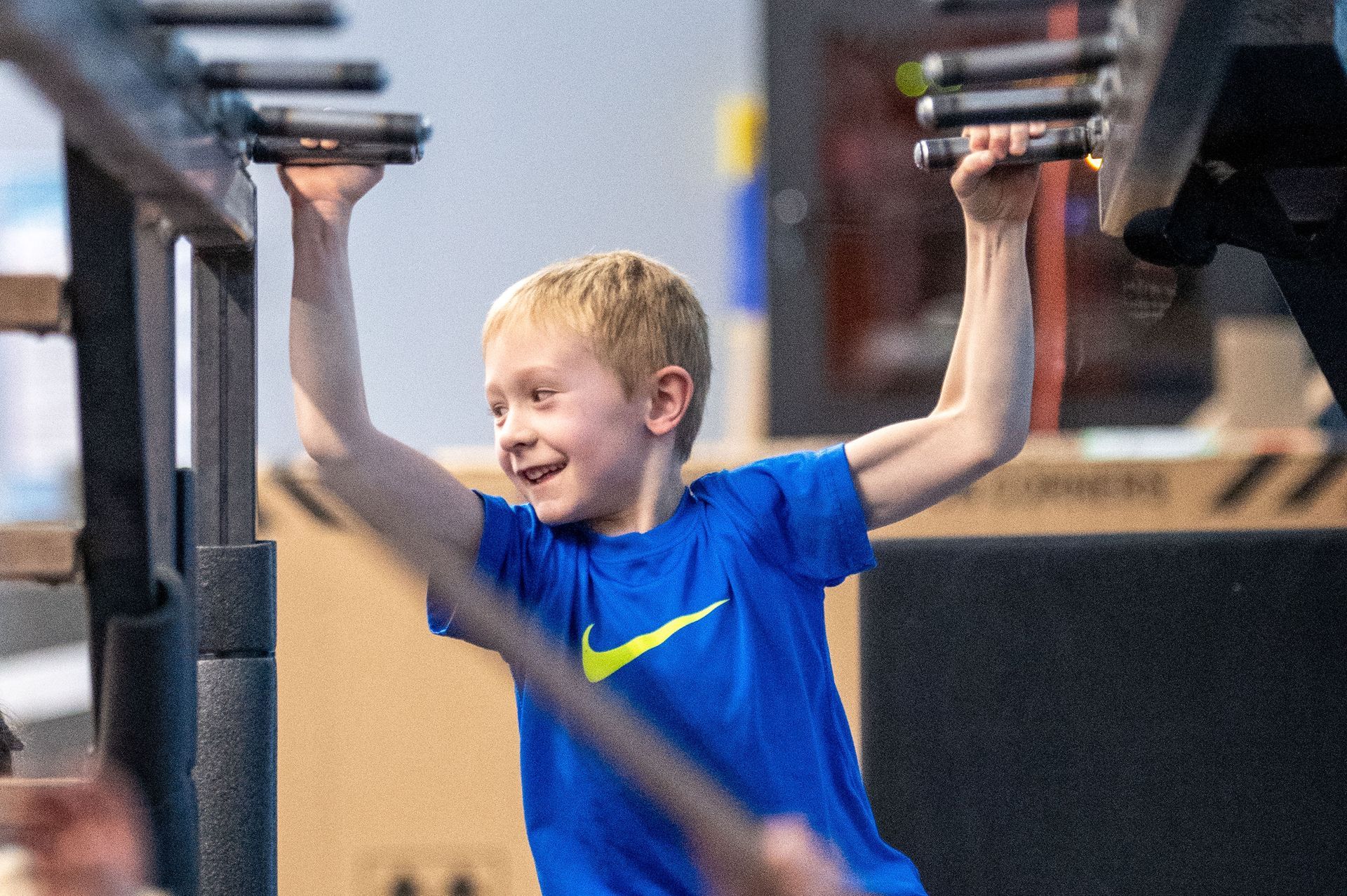
If you’ve ever walked your child into a new gym, you know the moment. They look around at kids who seem like they already know what they’re doing. The bars feel tall. The floor feels big. And then they look back at you with that face that says, “Are you sure about this?” At Olympia, we see that moment every day. And what happens next is the part most people don’t get to see from the outside. It’s also the part that matters most. Confidence Doesn’t Always Look Loud There’s a common misunderstanding about confidence in kids. We picture the child who runs in without hesitation. The one who raises their hand first. The one who never seems afraid. That’s not confidence. That’s personality. Real confidence is quieter. It’s the child who doesn’t want to try the cartwheel, tries it anyway, falls, and looks back at their coach. It’s the moment a coach meets them at eye level and says, “You almost had it. One more time.” That’s the moment. Not the skill. The decision to try again. Why Gymnastics Is Different from Other Activities Gymnastics for kids is different from most sports. There’s no bench. No hiding behind a teammate. Every turn belongs to them. At first, that can feel intimidating. For many kids, it is. But that’s also why gymnastics builds something that’s hard to replicate anywhere else. When a child works on a skill for weeks, struggles through it, and then finally gets it, they learn something no one can teach them with words: “I can do hard things.” And that lesson doesn’t stay in the gym. You’ll see it at home when they try something new without being asked. You’ll see it at school when they raise their hand even if they’re unsure. You’ll see it in small moments that don’t look like gymnastics at all, but started there. How Coaches Help Kids Build Real Confidence At Olympia, the coach-child relationship is where this really happens. The best coaches don’t just teach gymnastics skills. They teach kids how to handle frustration, how to keep going when something feels difficult, and how to measure success by effort, not just results. They notice when a child is hesitant. They know when to push and when to pause. And sometimes, the most important thing they say is simple: “I saw that. That was brave.” Those moments add up. Over time, they change how a child sees themselves. Why Parents Choose Gymnastics for Confidence Whether a child is naturally outgoing or more reserved, every child benefits from learning how to try, fail, and try again in a supportive environment. That’s why so many parents choose gymnastics classes for their kids—not just for the physical skills, but for what those skills represent. For over 45 years, Olympia has focused on more than just teaching flips and routines. We’ve focused on helping kids grow into confident, capable individuals who are willing to step forward, even when something feels uncertain. The skills matter. Kids love them. But what parents remember years later is something different. It’s the way their child started carrying themselves with a little more confidence. The way “I can’t” slowly turned into “I’ll try.” Where Confidence Starts That shift doesn’t happen in a single class. It happens over time. Through effort. Through encouragement. Through small, repeated moments of courage. If you’ve seen that “Are you sure about this?” look, you’re not alone. It’s where a lot of kids start. And it’s exactly where confidence begins.